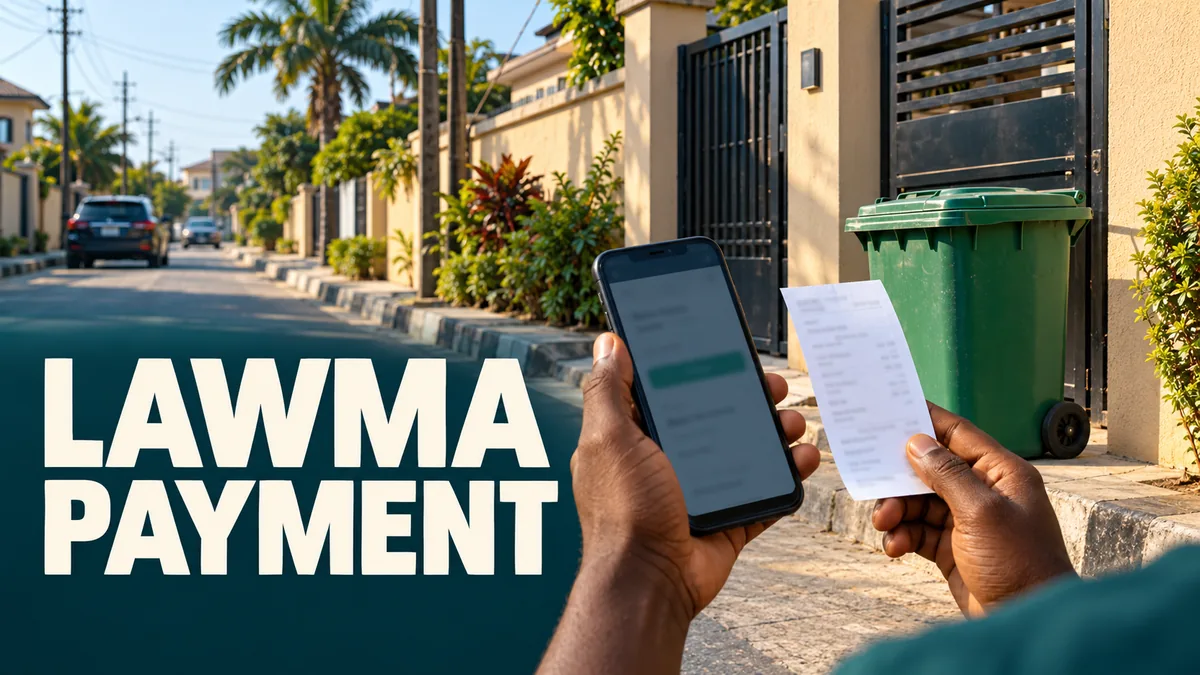
A waste bill can look straightforward until it carries an unfamiliar account number, includes arrears from before you moved in or fails to reflect a transfer you already made. Paying quickly is useful only when the money reaches the right property account and you can prove what it settled.
This LAWMA payment guide focuses on the bill in front of you. It explains how to verify the PSP operator, check the charge, use the official payment route and build a clear complaint if an amount or service record needs correction.
Understand The LAWMA Bill And Your PSP Operator
LAWMA oversees waste management in Lagos, while assigned Private Sector Participants provide collection services in their areas. Your first practical task is to identify the operator responsible for the property and the customer reference used for billing.
Compare the current invoice with a previous verified one. Look for the property address, customer or bill identifier, billing period, amount and operator details. A familiar street name is not enough if the building number or customer record is wrong.
If you have just moved, ask the landlord, managing agent or residents’ representative for the existing waste account information. Establish which charges relate to your occupancy and which are being disputed separately. Do not rely on an oral promise that an unexplained old balance will disappear after payment.
Verify A LAWMA Payment Request Before Transferring
Confirm the PSP operator through LAWMA’s official information or contact channel if you are unsure who serves the area. The official website includes a PSP section and a “Know Your PSP” initiative, which are useful starting points for an unfamiliar operator.
If a collector gives you new payment details, compare them with your verified bill and ask the operator or LAWMA to confirm the change. Be cautious when the beneficiary name bears no clear relationship to the billed organisation and there is no written explanation.
Keep the verification separate from the payment conversation. For example, contact an established number you already have rather than simply replying to the same message that supplied an unfamiliar account.
A legitimate-looking uniform, branded flyer or forwarded invoice should not be the sole basis for a LAWMA payment. The property reference and beneficiary details need to match a verified collection arrangement.
How To Pay LAWMA Bill Online
Begin at LAWMA’s official website or its customer billing portal to find the payment service for your bill. Confirm the current route with LAWMA or your verified PSP operator before paying. Starting from the agency’s own service helps avoid a copied payment page with a similar name.
Read the fields on the payment service and enter the bill or customer details requested. Confirm that the retrieved property and charge match the invoice you intend to settle. If the reference does not return a clear result, obtain assistance before selecting a different property to make the form proceed.
Review the amount, billing period and beneficiary before authorising payment. Save the receipt or confirmation generated by the service. If a PSP supplies an alternative authorised channel for your bill, verify it and retain the same level of evidence.
LAWMA payment online should leave a record that can be linked to your account. A bank debit alert alone may not show which property or month received the credit.
What To Check Before Paying A Waste Bill
First, read the dates. A charge described as a monthly bill may include earlier months. Compare its opening balance, new charge, payments credited and closing balance so you understand the amount being requested.
Second, check the property description. A residential flat, a shop, an office and a larger commercial premises may not be assessed alike. If the recorded use is wrong, ask for the basis of the assessment and the correction process.
Third, identify who is settling the bill. In a shared building, confirm whether the landlord or residents’ association pays centrally or each occupier has a separate arrangement. An internal contribution collected from tenants is different from the PSP’s property account.
Finally, compare the billed balance with your own receipts. A useful record shows the period settled, rather than just “waste payment” beside an amount in a notebook.
LAWMA Charges: Why Neighbours May Pay Different Amounts
There is no sound reason to assume that every Lagos household has the same waste bill. The property classification, agreed service arrangement and billing history need to be checked. Obtain the applicable assessment rather than borrowing a figure from a different building.
If a charge rises, request a written breakdown and the basis for the change. Compare like with like: the same property, use and billing period. A three-month invoice should not be compared directly with a neighbour’s one-month receipt.
Where several occupants share a charge, agree how the contribution is divided and who holds the official receipts. Record the calculation so a new tenant does not have to reconstruct it from conflicting explanations later.
For a disputed LAWMA payment amount, ask for reconciliation before treating the entire closing balance as a new monthly rate. That distinction is especially useful where an earlier payment has not been credited.
Get A Receipt That Identifies What You Paid
A LAWMA bill payment should be traceable to the property. Save the transaction reference, date, amount, beneficiary and property or customer reference. Keep the official receipt as well as the bank record. If a collection representative issues a paper acknowledgement, photograph it while the writing is still clear.
Ask for the billing periods covered if the receipt does not make them clear. A lump payment can be difficult to allocate later when both current charges and arrears exist on the account.
Use one folder for the property’s bills and receipts. A simple filename containing the payment date and period makes a later search easier. Back up the folder somewhere accessible to the person responsible for the next payment.
After a LAWMA payment, check that the balance reflects the credit when the account is updated. Do not discard the receipt merely because a collector verbally confirms receipt of the money.
Paid But Not Credited: How To Ask For Reconciliation
Prepare a short comparison showing the invoice balance, payment amount and date, and the balance still being claimed. Attach the transaction reference and the receipt, with unnecessary bank information hidden.
Send the enquiry to the verified PSP or official payment support channel. Ask whether the money reached the correct property account, whether a reference was missing or whether the payment needs to be allocated to particular periods.
Avoid sending the same amount again simply to remove an unresolved message. If a payment failed or reversed, verify that position with the payment provider or bank. A pending transaction should be investigated before it is treated as a final credit or loss.
Keep a dated record of each response. If the issue needs escalation, this makes it possible to show what has already been supplied and what remains unanswered.
Missed Collection And Billing Complaints
Record missed collection dates and the property reference. Explain whether the problem is an isolated missed visit, a repeated absence or a disagreement about the assigned operator. These are different service issues and should be described clearly.
Keep waste securely contained while seeking a resolution. Do not dump it in a drain or on the street to demonstrate a service complaint. Ask about the next collection arrangement through the responsible operator or LAWMA.
LAWMA customer care details are available on the official website, including 080-000-LAWMA, written numerically as 080-000-52962, and info@lawma.gov.ng. Confirm the current contact information on the site before sharing account details.
A LAWMA payment dispute and a service complaint can exist together. State both issues, but make clear which action you are requesting for each, such as allocating an existing payment and investigating repeated missed collections.
Moving House, Vacant Premises And Shared Compounds
When moving out, keep a final record of the periods you paid and send any agreed account update through the responsible channel. A private handover with a new tenant may not update the PSP’s billing record.
For a vacant property, ask how the operator records vacancy and what evidence is required. Do not assume that leaving the building automatically stops every charge. Keep the written response with the property documents.
In a shared compound, appoint someone to maintain a clear receipt record even when the person collecting contributions changes. Residents should be able to distinguish money collected internally from money actually remitted to the PSP.
An accurate location description also helps with service enquiries. If your building is difficult to identify, the NIPOST digital postcode guide explains a separate way to share its location precisely.
Frequently Asked Questions
Can I Make A LAWMA Payment Without A Bill Number?
Ask the verified operator or official payment support to identify the correct account first. Do not select an unrelated reference simply to complete a transaction. The payment must be traceable to your property.
Is There One LAWMA Account Number For Every Resident?
Do not assume so. Use the payment route linked by LAWMA and the verified instructions for your actual bill. Confirm any alternative beneficiary before sending money.
Does A Bank Alert Replace A Receipt?
A bank alert proves a transaction event, but may omit the property and periods covered. Keep the official payment acknowledgement and check the account credit as well.
What Should I Do If A Collector Asks Me To Pay Again?
Show the existing evidence privately through a verified channel and request reconciliation. A repeated demand should be matched against the property ledger before another LAWMA payment is made.